
loss weight programs
How to Compare Weight Loss Programs for Your Goals in Lafayette, Indiana

A worksheet for comparing weight loss programs in Lafayette
Weight loss programs can be compared more clearly when each option is entered into the same worksheet rather than judged from a slogan or an expected result. This worksheet records concrete program details, leaves missing information visible, and turns the remaining gaps into questions for a qualified healthcare professional. It is a comparison aid, not a way to determine eligibility or predict an individual’s outcome.
Your comparison can focus on six practical questions:
For each program, create one entry with these fields:
- Documented components: note whether the description includes a comprehensive lifestyle approach. Record any medication discussions or other medical options separately instead of treating them as interchangeable with lifestyle support.
- Participation record: note the activities, appointments, self-monitoring, food changes, or other tasks the program describes. If the schedule or time requirement is not stated, label it “not stated” rather than filling in the gap.
- Clinical review: write down what information is reviewed, how progress is discussed, and when treatment decisions can be revisited. A general program description does not establish how a practice will evaluate one person.
- Personal fit notes: compare the recorded demands with work hours, travel, family responsibilities, ordinary meals, and the support available outside appointments.
- Continuation notes: record whether the description addresses ongoing support, contact, or maintenance after the initial phase. If it does not, keep that as an open question.
- Questions for the consultation: list the details needed to understand supervision, treatment choices, monitoring, and continued support before enrolling.
Side-by-side entries change the decision from choosing a label to checking what is actually known about each option. A program may have a clearly described lifestyle structure while leaving visit timing or follow-up unclear; another may describe additional treatment components without explaining how they fit a person’s routine. The worksheet does not fill those gaps. It shows where a conversation is needed and prevents a broad description from being mistaken for an individualized recommendation.
For a middle-aged professional in Lafayette, this format keeps the decision tied to an ordinary week. It creates a short record of what a program describes, what remains unknown, and which questions belong with a qualified healthcare professional. The result is a preparation tool for a consultation, not a promise about treatment or outcome.
Use three labels in every entry: documented, not stated, and clinician discussion. “Documented” is limited to what the program description actually says. “Not stated” keeps an absent detail from becoming an assumption. “Clinician discussion” covers questions about how the approach relates to a person’s health information, including medication choices, interactions, pregnancy or breastfeeding, and whether combining weight-loss products is appropriate; those questions are not resolved by a general article.
The worksheet also gives a consistent place to note program components, practical demands, the review process, and the support described after the initial phase. When two options appear similar, the useful difference may be an unanswered question rather than a promise. Bring those gaps to a qualified healthcare professional, and use the answers to decide whether a consultation with Innovative Medicine in Lafayette is worth requesting.
What a comprehensive weight loss program may include
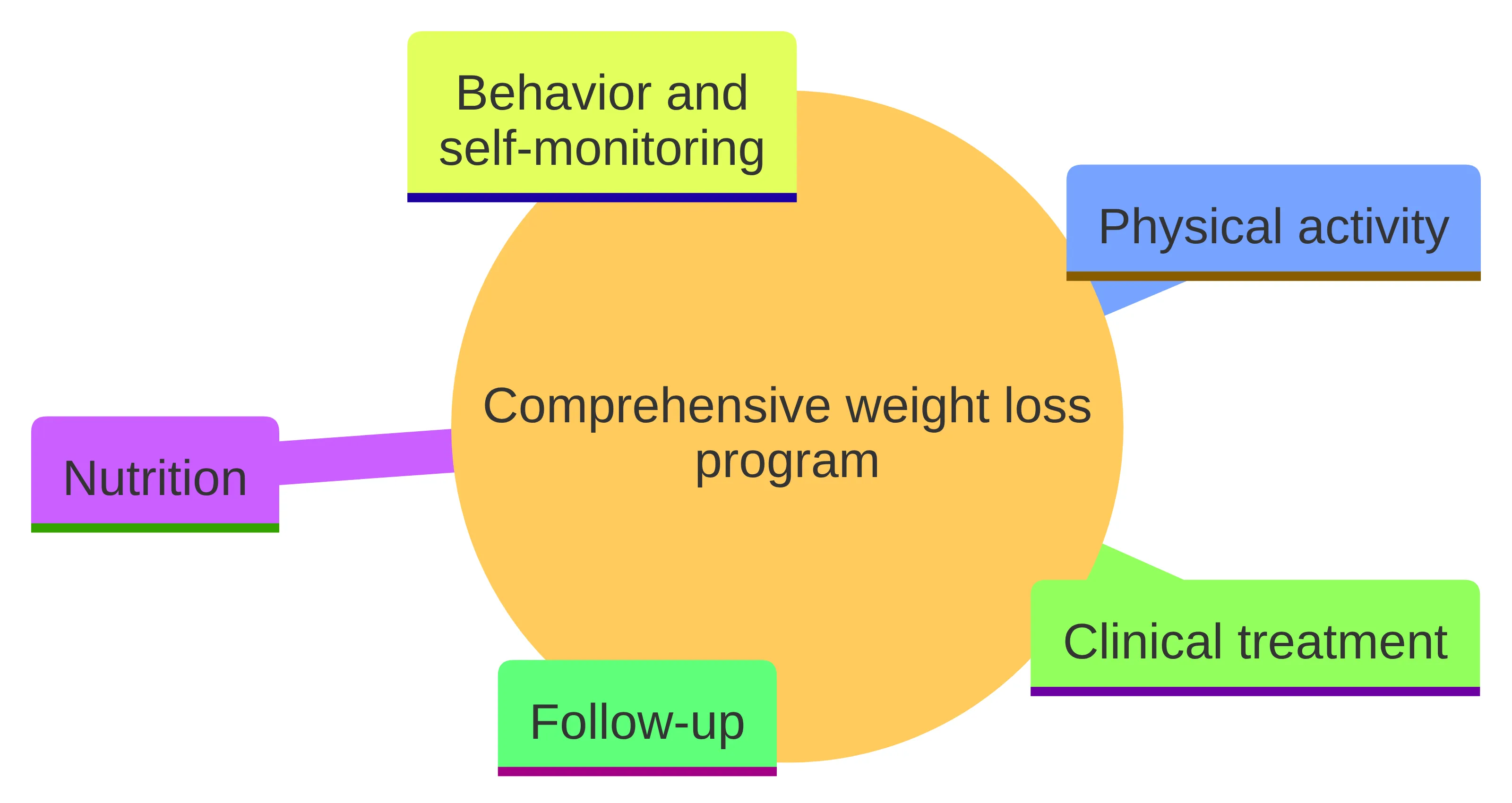
The combination matters because a program is more than a food list or a short period of exercise; it gives you several areas to discuss, practice, and review.
A program may address these areas in different ways:
- Nutrition: You may discuss how meals, portions, timing, preferences, and workday constraints fit into the plan. Ask what kind of nutrition guidance you would receive and how it would be adjusted if your routine changes.
- Physical activity: You may discuss movement that is realistic for your current circumstances. Ask how activity expectations are introduced, followed, and adapted rather than assuming that a generic target applies to you.
- Behavior and self-monitoring: You may track selected behaviors, meals, activity, or other information so that you and the healthcare professional can discuss patterns. Ask what you would record, how often, and how the information would affect the next conversation.
- Clinical treatment: Medication or another medical option may be discussed when it is relevant to your circumstances. Ask what the option is intended to address, how it works, and which benefits, drawbacks, side effects, or interactions require attention.
- Follow-up: You may need scheduled contacts or other support to review progress and decide whether the plan needs to change.
A comprehensive approach also gives you something concrete to compare. Instead of asking whether a program is comprehensive as a label, ask which of these components it includes, who leads each part, and how the pieces connect.
Treatment components should remain understandable. Medical treatment is not automatically a shortcut or an easy way out: overweight and obesity have a biological basis involving signals that regulate hunger, fullness, and how the body stores energy, fat, and muscle, and medication or surgery can be logical medical treatment options. Discussing those options does not remove the need to understand nutrition, activity, behavior, follow-up, or long-term maintenance.
Ask each program to explain how its components fit together. If a program centers on lifestyle work, ask how self-monitoring and support are handled. If medication or another medical option is part of the discussion, ask what clinical information guides that conversation. If the program does not explain how you will participate after the initial phase, treat that as a question to resolve before enrolling.
Compare programs by clinical involvement and treatment components
Clinical involvement describes how a healthcare professional participates in the decision, not simply whether a program uses medical language. Medication and surgery can be logical treatment options for overweight and obesity, and available choices should be discussed with a healthcare provider who explains how each option works, along with its pros, cons, and side effects.
Compare clinical involvement by asking:
- Is a healthcare professional part of the evaluation and follow-up process?
- Will the professional explain the purpose of each treatment component in plain language?
- Can you discuss advantages, drawbacks, side effects, and alternatives before accepting a plan?
- What information will the professional use to decide whether a component should be considered?
- How will you raise concerns if the plan does not fit your schedule or experience?
A lifestyle-focused structure may place more emphasis on nutrition, activity, behavior strategies, and self-monitoring. A medication-inclusive structure adds a medical treatment discussion that requires review of other medicines, over-the-counter products, herbal products, and relevant health circumstances. A surgery discussion is also a medical conversation, not a comparison based on internet claims. For a lifestyle-focused option, ask how behavioral support and follow-up work. For a medication discussion, ask the healthcare professional to explain the treatment and its conditions before you decide. For a surgery discussion, ask what evaluation and follow-up the professional considers necessary rather than treating a general description as a recommendation.
The purpose of this comparison is not to rank the categories. The purpose is to identify the level of explanation and involvement you need before moving forward.
Treatment components should be compared by the decision they create for you. A food-and-activity plan may require a discussion about daily routines and self-monitoring. Medication may require a discussion about interactions, side effects, pregnancy-related considerations, breastfeeding, and products you already take. Surgery may require a separate clinical evaluation and explanation of its risks and benefits.
Write down the component you are considering and the question it raises. Then take that question to a healthcare professional who can explain the relevant option instead of choosing from a general program description.
Assess supervision, safety, and medication discussions
Medication discussions require direct supervision because weight-loss medications may interact harmfully with prescription medicines, over-the-counter products, or herbal products. NIDDK guidance published April 8, 2026 advised discussing everything you take with a healthcare professional. The same guidance advised against combining weight-loss medications with other products intended for weight loss unless a healthcare professional prescribes the combination.
Use medication safety as a comparison checkpoint:
- Ask how the professional will review your prescriptions, nonprescription medicines, supplements, and herbal products.
- Ask what side effects and warning symptoms should be discussed before treatment is considered.
- Ask how the professional will explain the expected purpose, possible drawbacks, and follow-up for the option under discussion.
- Tell the professional if you are pregnant, planning to become pregnant, or breastfeeding. The cited NIDDK guidance advised against weight-loss medications during pregnancy or when planning pregnancy because of potential fetal harm and did not recommend them during breastfeeding.
- Ask how allergies or sensitivities would be included in the discussion.
These questions do not select a medication or establish that any medication is suitable for you. They create the information exchange needed before a professional can discuss an option responsibly.
Supervision also includes the quality of the explanation. A healthcare provider should help you weigh risks and benefits and explain how each treatment works, its pros, cons, and side effects. A program that gives you a product name without a clear discussion leaves an important part of the decision unanswered.
Ask who will answer medication questions, when follow-up occurs, and what information should be brought to the appointment. If you take multiple medicines or supplements, prepare a complete list before the discussion. Do not combine weight-loss products unless a healthcare professional prescribes that combination.
Measure personalization against your work and personal responsibilities
Personalization means that the program addresses your individual struggles and goals rather than handing you a fixed package with no room for discussion. Innovative Medicine offers a variety of weight-loss techniques tailored to individual struggles and goals. That first-party description establishes what we offer; it does not establish that every technique fits every circumstance.
Your work and personal responsibilities should become specific comparison criteria. Consider:
- Your usual work hours and whether appointments can fit without creating a recurring conflict.
- Travel, conferences, client meals, shift changes, or periods when your usual routine changes.
- Household responsibilities that affect meal planning, shopping, activity, or appointment attendance.
- The amount of tracking or preparation you can realistically maintain.
- The type of contact you find useful when questions arise between visits.
- Your preference for a more structured plan, a broader discussion of options, or a combination that a professional can explain.
Use these points to ask how the program handles an ordinary difficult week. A personalized plan should be explainable in practical terms: what you would do, what support you would receive, what information you would bring back, and how the next decision would be made.
A program’s stated flexibility should lead to concrete questions. Ask which parts can be tailored, what information informs that tailoring, and how changes in your goals or routine would be handled. Ask whether the program includes one treatment component or a range of techniques that can be discussed with you.
Personalization is not the same as a promise of a particular result. It is a way to make the plan and the decision process more relevant to your circumstances. Leave the conversation with a clear understanding of what would be discussed next, not with an assumption that a general description determines your care.
Check how the program monitors progress and adapts care
Progress monitoring shows how a program turns follow-up information into the next conversation. Innovative Medicine measures patient data and adjusts treatment based on laboratory results and patient improvement. We also review progress, adjust plans as the body changes, and provide accountability between visits. These are first-party descriptions of our process, not a guarantee about an individual plan or outcome.
Ask a program to explain its monitoring process in the same practical terms:
- What information will be reviewed?
- Which results may change the discussion?
- How often will progress be reviewed?
- Who will explain the results and planned actions?
- What happens if progress, symptoms, or daily responsibilities change?
- How can you raise a question between scheduled contacts?
Monitoring should have a purpose that you can understand. If a program collects information but does not explain how that information affects the plan, ask for clarification before you decide.
Laboratory results should be explained in context rather than treated as isolated instructions. Innovative Medicine explains what is out of range, what it may mean for the body, the planned actions, and a recovery timeline. When you compare programs, ask whether results will be explained in this level of practical detail and how questions about those explanations will be handled.
The useful comparison is not how many measurements a program mentions. The useful comparison is whether you understand what is being reviewed, why it matters to the discussion, and what happens after the review. That standard can help you distinguish ongoing care from a one-time handout.
Compare participation demands with the life you need to sustain
Participation demands include appointments, food planning, activity, self-monitoring, treatment discussions, and follow-up between visits.
Compare the demands against your actual week:
- Put the expected appointments beside your work calendar and identify recurring conflicts.
- Ask how meals or meal replacements fit into travel, meetings, and family routines.
- Ask what self-monitoring involves and how much time it usually takes within the program’s structure.
- Ask how missed contacts, schedule changes, or a demanding work period are handled.
- Ask whether counseling or other support occurs only during appointments or also between visits.
- Identify which parts of the plan you would need to prepare before work, after work, or on weekends.
Innovative Medicine’s Innovative Protein program includes high-protein meal replacements, intensive counseling, and prescription appetite suppressants. Those components create specific questions about meal planning, counseling frequency, prescription review, and how the program fits your responsibilities. They do not tell you whether the program is appropriate for you; they tell you what to ask about.
Lifestyle fit is not a test of motivation. It is a practical question about whether you understand the expected work and can discuss adjustments when circumstances change. A program that requires regular contact may provide a useful structure for you, or it may conflict with your schedule unless the timing is workable.
Ask for a plain description of a typical participation period. Then compare that description with your calendar, household responsibilities, travel, and preferred way of receiving support. Choose the next conversation only after you understand the demands you would be discussing.
Treat maintenance support as part of the comparison
Maintenance support belongs in the comparison from the beginning, not as an afterthought once an initial phase ends. The PRIDE manual identifies self-monitoring, sustained physical activity, and continued professional or commercial support as relevant to maintaining weight loss. The manual also identifies a lack of continued support or contact as something that can contribute to regain.
Ask each program what happens after the initial treatment period:
- Does follow-up continue, change frequency, or end?
- Which behaviors or information would you continue to monitor?
- How would you discuss a change in weight, activity, routine, or motivation?
- Who would provide support if your work or family responsibilities changed?
- How would the program revisit treatment components rather than leaving you with a static plan?
The answers help you compare continuity. A maintenance conversation should explain what you would continue doing, how contact would work, and when you would bring a concern back to the professional.
Self-monitoring can make daily behavior more visible, while continued activity and support can keep maintenance in the ongoing discussion. The PRIDE manual presents these as relevant factors, not as a promise that any particular program will produce a particular outcome.
Treat maintenance as a required question before you enroll. If the answer is limited to the end of the initial phase, ask what support, monitoring, and professional contact would be available afterward. If the program has a continuing structure, ask how that structure fits the life you are trying to sustain.
Create an answer record for a Lafayette weight loss consultation
Use this section as an answer record for a consultation. Capture what the healthcare professional explains and note what remains unclear. The record helps you revisit the conversation while considering whether to request an evaluation.
What the program includes
- What components are included: nutrition guidance, physical activity, behavioral strategies, self-monitoring, counseling, medication discussion, or another medical option?
- How often do scheduled contacts occur, and what is expected between contacts?
- Who provides each part of the program?
How the plan would fit
- Which parts can be adapted to work hours, travel, household responsibilities, and food preferences?
- What information will be used to discuss the plan?
- How would the plan be revisited if your circumstances changed?
How treatment choices are explained
- Which healthcare professional explains the options and answers questions about benefits, drawbacks, side effects, and alternatives?
- What information would be needed before a treatment component is considered?
- How will you discuss whether a medication or another medical option belongs in the conversation?
How progress and continued support are handled
- What progress information is reviewed, and how does it affect the next discussion?
- How are laboratory results explained when they are part of care?
- What support continues after the initial phase?
Keep the answers together and mark any term or response that needs clarification. Use the record to refer back to the provider’s explanation when deciding whether to request an evaluation. Individual suitability requires professional evaluation.
Medication questions should be specific enough to protect the discussion from missing information. Ask how the professional will review prescriptions, over-the-counter medicines, supplements, and herbal products because weight-loss medications may interact harmfully with them. Ask whether any proposed combination with another weight-loss product has been prescribed by a healthcare professional. Tell the professional about pregnancy, plans for pregnancy, breastfeeding, allergies, or sensitivities before discussing medication.
A healthcare provider should explain how an option works and help you weigh its pros, cons, side effects, and risks. Write down the answers in your own words. If an answer is unclear, ask for an explanation before making a decision.
Your preparation can include a typical workweek, appointment constraints, current medicines and supplements, questions about meal planning, and the kind of follow-up you can maintain. You do not need to arrive with a diagnosis or a treatment choice. You need enough practical information to describe your goals and responsibilities clearly.
Use the questions as a comparison sheet. Note what each program includes, who explains it, how progress is reviewed, and what happens after the initial phase. That record can make the eventual healthcare conversation more focused.
What Innovative Medicine can discuss in Lafayette
Innovative Medicine offers weight-loss consultation appointments with weight-loss experts in Lafayette, Indiana. We offer a variety of weight-loss techniques tailored to individual struggles and goals. These first-party facts describe the consultation and services available through Innovative Medicine; they do not establish that a particular option is appropriate for you.
Our weight-loss conversation can be organized around the same comparison criteria used throughout this guide:
- What you want the program to address and what responsibilities shape your week.
- Which weight-loss techniques may be relevant to discuss.
- What level of clinical involvement and follow-up you need to understand the options.
- How progress information and laboratory results may be used in the care discussion.
- What support and accountability should look like between visits and during the longer maintenance period.
If you are comparing physician-supervised weight-loss options in Lafayette, bring your schedule, treatment questions, current products, and maintenance concerns to the consultation discussion.
Innovative Protein is a concrete example of why treatment details matter. Ask how meal replacements fit your routine, what intensive counseling involves, how prescription treatment would be discussed, and what monitoring or follow-up would accompany the program.
Innovative Medicine also offers tailored weight-loss techniques beyond that named program. Ask which components would be discussed in your circumstances and how the practice would explain their role. A general program description should lead to questions, not to a self-directed treatment decision.
Keep general education separate from individual treatment decisions
General health information can help you compare program components, prepare questions, and identify topics that need professional discussion. General information cannot choose a medication, authorize a combination of weight-loss products, interpret your complete health history, or determine which treatment component belongs in your care.
Medication safety illustrates the boundary clearly. You can learn that weight-loss medications may interact with other medicines, over-the-counter products, or herbal products, and that combining weight-loss products requires a healthcare professional’s prescription. You can also learn that pregnancy, plans for pregnancy, breastfeeding, allergies, and sensitivities should be raised in the discussion. Those facts tell you what to disclose and ask; they do not tell you what treatment to use.
The same distinction applies to program intensity, monitoring, and maintenance. A guideline-referenced session range can help you ask about contact frequency. A description of self-monitoring can help you ask what you would track. A practice’s description of laboratory review can help you ask how results would be explained. None of those points replaces the conversation about your circumstances.
Use education to improve the quality of your questions, not to turn a general description into a personal plan. Ask how a provider would explain the available options, how each works, what its pros and cons are, and what side effects or other conditions matter. Keep the decision with the professional conversation rather than selecting a treatment from a search result, testimonial, or program label.
Choose the next informed conversation in Lafayette
A useful weight-loss program comparison ends with clear questions about supervision, personalization, lifestyle fit, treatment components, monitoring, and maintenance. A comprehensive lifestyle program can provide a structured foundation, while medication or another medical option may be part of a broader healthcare discussion. Your schedule and responsibilities should shape the questions you bring, not force you to choose from a promise.
Innovative Medicine offers weight-loss consultation appointments with weight-loss experts in Lafayette, Indiana, and our services include techniques tailored to individual struggles and goals. Bring the comparison criteria from this guide to that conversation. A qualified healthcare professional must determine whether a program or treatment option suits your circumstances.
Prepare your current questions, relevant medicines and supplements, work constraints, and concerns about long-term support. That preparation gives you a practical starting point for discussing the next step.
What should you ask before comparing a weight loss program?
What components are typically included in a comprehensive weight loss program?
A comprehensive weight loss program usually combines a reduced-calorie diet, increased physical activity, and behavioral strategies such as self-monitoring. It may also include clinical treatment options like medication or surgery, depending on individual needs.
How can I assess the personalization of a weight loss program?
To assess personalization, consider how the program adapts to your individual struggles and goals. Ask about the flexibility of the plan regarding your work schedule, family responsibilities, and personal preferences.
What should I ask about medication safety when considering a weight loss program?
Inquire how the program will review your current medications, supplements, and any potential interactions with weight-loss medications. It’s important to discuss any allergies or sensitivities as well.
What follow-up support should I expect after the initial phase of a weight loss program?
Ask what kind of ongoing support and monitoring will be available after the initial treatment period. This includes how progress will be reviewed and what resources will be provided to help maintain weight loss.
How can I prepare for a consultation about weight loss options in Lafayette?
Prepare by bringing your current medications, questions about the program, and details about your work and personal responsibilities. This will help facilitate a focused discussion about your needs.
What role does clinical supervision play in weight loss programs?
Clinical supervision involves healthcare professionals guiding the treatment process, explaining options, and monitoring progress.
Need help applying this?
Want this looked at properly?
Innovative Medicine is taking new patients in Lafayette, Indiana. Call the office and tell us what has been going on.
Call (765) 471-1100