
loss weight programs
How to Compare Weight Loss Programs Before Choosing Care in Lafayette

Ask what Innovative Medicine’s weight-loss options include
Structured weight-management care is easier to compare when you judge the process instead of choosing from an advertising promise. If you are balancing work, family responsibilities, and health concerns in Lafayette or West Lafayette, the useful question is not simply which option sounds fastest. The more useful next step is to use the advertisement as a prompt for questions to take to a qualified healthcare professional, not as evidence that a program fits your health history.
Advertising can make a difficult decision look simple. Those points give you a practical first screen: treat dramatic testimonials and rapid-loss promises as reasons to ask more questions, not as evidence that a program fits you.
Knowing what a program includes helps you ask focused questions. Whether an option is appropriate for you requires discussion of your health history with a qualified healthcare professional.
A useful fit screen asks five questions:
- Who provides oversight? Identify who discusses treatment choices, reviews relevant information, and coordinates with other care.
- How is the plan personalized? Look for a process that considers your goals, prior attempts, health conditions, and current medications rather than assigning the same approach to everyone.
- What support is included? Ask whether the program addresses nutrition, activity, counseling, monitoring, and the period between appointments.
- What practical demands will you carry? Clarify appointment expectations, costs, treatment duration, and the work you would need to complete outside visits.
- What happens after the first decision? Ask how progress is reviewed and what leads to an adjustment, continuation, referral, or change in approach.
These questions turn a vague search into a conversation you can prepare for. They also give you a way to compare a self-directed effort with a structured clinical program without assuming that either option is automatically appropriate.
Map the main weight loss program approaches
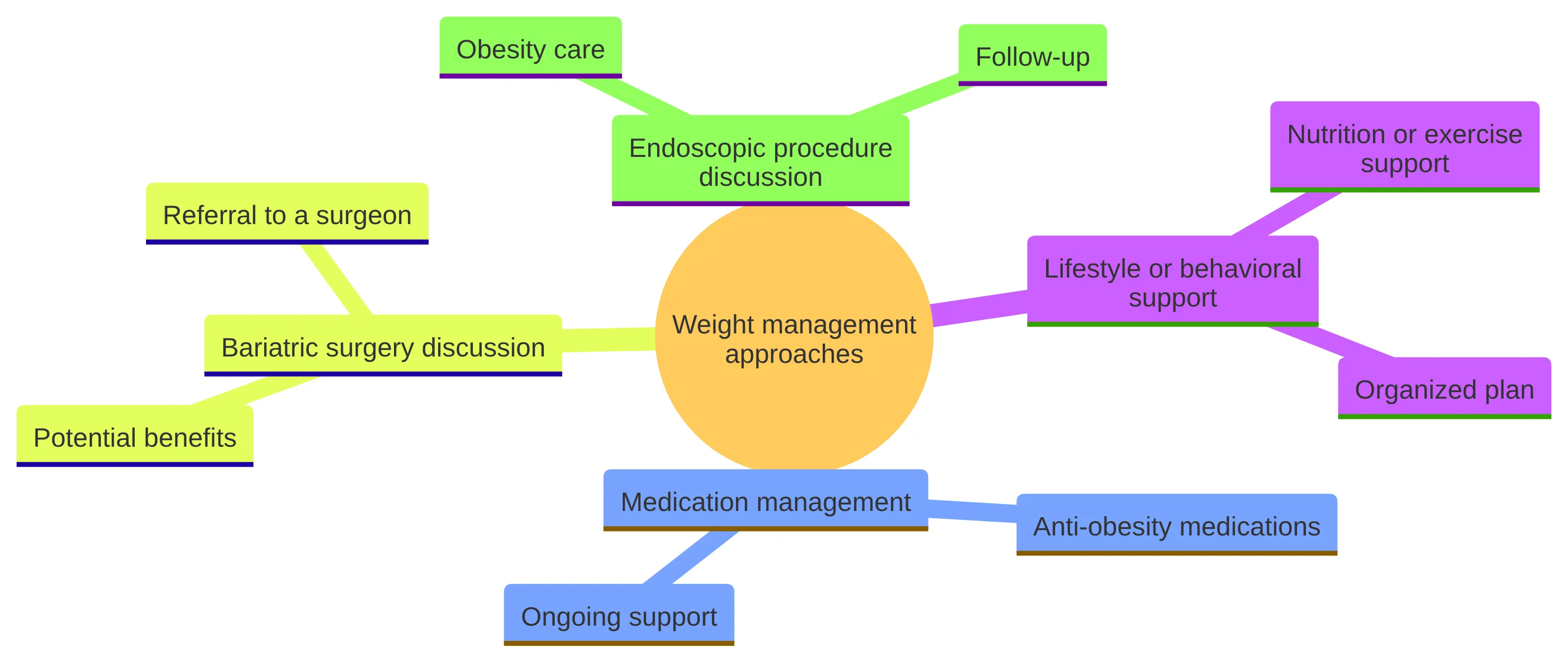
Weight-management care may involve several different approaches, and the word “program” can describe very different levels of support. The Obesity Medicine Association describes treatment options that may include anti-obesity medications, bariatric surgery discussions with referral when needed, and endoscopic procedures. Consultation guidance also recommends asking about the provider’s approach, suggested treatments, anticipated results, nutrition or exercise support, and any initial-visit fees.
A self-directed effort generally leaves you responsible for choosing the information, setting the routine, and deciding how to respond when circumstances change. A structured program makes more of those responsibilities part of an organized process. That may include a consultation, a proposed treatment approach, support between decisions, and a way to review progress. The label alone does not tell you how much oversight or support you will receive, so ask the program to describe its actual process.
| Approach to discuss | What the approach may involve | Questions that keep the comparison practical |
|---|---|---|
| Lifestyle or behavioral support | Nutrition or exercise support and an organized plan for discussing goals and participation | What support is available, how often does it occur, and what happens between appointments? |
| Bariatric surgery discussion | Discussion of potential benefits and referral to a surgeon when needed | What factors would lead to a referral, and what preparation and follow-up would the discussion include? |
| Endoscopic procedure discussion | Consideration of an endoscopic procedure as part of obesity care | Is this option relevant to the health context being evaluated, and what follow-up would it require? |
The table is a map for questions, not a ranking. A treatment category cannot establish your eligibility, expected result, or personal fit before an individual evaluation.
We offer weight loss consultation appointments with weight loss experts and a variety of weight loss techniques tailored to individual struggles and goals. Those facts describe an available starting point in Lafayette; they do not establish that every technique is appropriate for every person. Use the consultation to identify which approach is relevant to your health context, responsibilities, and goals.
Compare clinical oversight before comparing treatments
Clinical oversight means knowing who is responsible for the treatment conversation, what information informs the discussion, and how the plan changes when new information appears. It is more specific than seeing a professional once or receiving a list of products. The Obesity Medicine Association identifies coverage, cost, complications, and contraindications as considerations in obesity treatment. Those considerations belong in the comparison before you focus on a particular medication, procedure, or promotional claim.
We collaborate with primary care doctors and specialists rather than replacing them. We also measure patient data and adjust treatment based on lab results and patient improvement. These are descriptions of our process, not a promise about an outcome. If coordination or measurement matters to you, ask how those responsibilities would apply to your situation.
Use questions that make oversight visible:
- Who reviews my health history and discusses the available approaches?
- What information will you consider before suggesting a treatment?
- How do you address current medications and pertinent health conditions?
- How are coverage, cost, complications, and contraindications discussed?
- Who reviews progress after the initial decision?
- What information would lead to an adjustment, a different approach, or coordination with my primary care doctor or another specialist?
- If a procedure or medication is discussed, who manages the next stage of care?
A clear answer should identify responsibilities rather than relying on general language such as “personalized care.” You do not need to choose a treatment during the first conversation. You need enough information to understand how the decision would be made and followed.
Monitoring also needs a defined purpose. We adjust treatment based on lab results and patient improvement. Ask what information is reviewed, when it is reviewed, and how the review affects the next conversation. A monitoring statement is useful only when you understand the decision it is meant to inform.
Check whether personalization is real
Personalization is real when your goals, history, circumstances, and response to care affect the plan. It is not established by using the word “customized” in an advertisement. Consultation guidance recommends bringing a detailed medical history that includes current medications, prior weight-management attempts, and pertinent health conditions. That information gives the discussion something concrete to work from.
We offer weight loss techniques tailored to individual struggles and goals. If you speak with us, ask how your stated goals and prior experience would shape the conversation. You can also ask what would cause the plan to change if your circumstances or response changes. A personalized process should be explainable in ordinary language.
A personalization check can include these prompts:
- Which of my goals should guide the initial discussion?
- How will you account for my current medications and pertinent health conditions?
- How will previous attempts at weight management inform the conversation?
- What parts of the plan depend on my schedule, food routine, activity pattern, or available support?
- What information would make you reconsider the approach?
- How will you distinguish a change in my circumstances from a reason to adjust treatment?
- What should I track or bring to the next appointment?
The answers matter more than the number of options presented. A long menu of treatments is not the same as a reasoned connection between an approach and your circumstances. Keep your focus on how the process moves from information to discussion to follow-up.
Individual goals also need careful wording. You can describe what you want to change, what responsibilities you need the process to accommodate, and what kind of support you can realistically use. A consultation can then address which available techniques may fit that discussion. Avoid treating a general description of a program as a personal recommendation.
Look for safety screening before treatment choices
Safety screening should come before choosing among treatment categories. The Obesity Medicine Association identifies complications and contraindications as considerations in obesity treatment, while consultation-preparation guidance recommends bringing current medications and pertinent health conditions. Together, those points support a simple rule: do not compare a treatment by its advertised convenience before discussing the information that could change whether it belongs in your conversation.
Safety screening is not the same as receiving a treatment recommendation. Screening identifies the questions that need attention. Your history, current medicines, health conditions, goals, and other factors may change which topics a professional needs to address. Bring a complete account of those details rather than relying on memory during an appointment.
Use the program’s public promises as part of the screening process. The Obesity Action Coalition says there are no accepted medical treatments for obesity that do not recommend diet and exercise. An advertisement that presents a treatment as effortless, permanent, or independent of ongoing participation deserves careful questioning.
Ask for the conditions attached to any proposed approach:
- What information must be reviewed first?
- What complications or contraindications need discussion?
- What participation is expected outside appointments?
- What ongoing support or treatment may be needed?
- What would make the approach inappropriate to continue?
A program that answers those questions directly gives you a clearer basis for discussion than a program that asks you to decide from a promise alone.
Prepare a concise health record before you meet. Include current medications, prior weight-management attempts, and pertinent health conditions, as consultation guidance recommends. Add the questions you want answered and the practical limits that affect your participation. This preparation does not determine your suitability; it gives the appointment information that can be discussed.
Measure support by what happens between appointments
Use this between-appointment checklist:
- Progress review: Ask what information you should bring to follow-up.
- Plan adjustments: Ask how changes in your body or circumstances affect the next discussion.
- Accountability: Ask what contact or check-in structure is available between visits.
- Data review: Ask how patient data and lab results enter treatment decisions.
- Escalation: Ask who should receive a concern and what happens after you report it.
A program may have a thoughtful first appointment and still leave the later process unclear. Give follow-up the same attention you give the initial treatment menu. The ongoing process is part of the decision.
Support should not be confused with a guarantee. Treat support as a feature to understand and use, not as proof of a predetermined outcome.
Test the program against a working professional’s schedule
A weight-management program has to fit the responsibilities you actually carry. If you work in Lafayette or West Lafayette and manage meetings, commuting, family needs, or irregular days, ask how the process works outside the appointment itself. A program that sounds clear in a brochure may still be difficult to participate in if the timing, preparation, or follow-up demands are not explained.
Consultation guidance recommends asking about available nutrition or exercise support, suggested treatments, anticipated results, and any initial-visit fees. We provide accountability for our weight-loss patients between visits. Use those points to ask how participation would fit your week rather than assuming that support will take a particular form.
Ask practical scheduling questions before you commit to a process:
- How often would appointments or check-ins occur at the beginning?
- What preparation is expected before each visit?
- What support is available between appointments?
- How much time might nutrition, activity, counseling, or other program tasks require?
- How are missed or rescheduled appointments handled?
- What initial-visit fees should you expect?
- How would a demanding work period affect the plan or follow-up conversation?
These questions do not ask the program to remove every responsibility. They help you see whether the responsibilities are clear enough to plan around. Write down the answers and compare them with your actual calendar.
Schedule fit should remain a two-way discussion. Bring the constraints that matter to you, and ask what participation requires. Do not infer appointment availability, between-visit contact, or program flexibility from an advertisement; ask for the process directly during the consultation.
Treat outcomes, duration, and cost as questions—not guarantees
Consultation guidance recommends asking about suggested treatments and anticipated results. The Obesity Action Coalition says no medically accepted method can make permanent weight loss certain, and it cautions that weight regain can occur without ongoing support or treatment. Those points do not tell you what result you will have. They tell you to ask how the program describes uncertainty, continued participation, and follow-up.
Duration belongs in the first treatment conversation. The Obesity Medicine Association also identifies coverage and cost as considerations in obesity treatment. When a treatment is discussed, ask what duration is being considered, what ongoing support may be involved, and how cost or coverage affects the decision.
The same principle applies to procedures, counseling, and other structured approaches: ask what the initial stage includes, what follow-up may involve, and what circumstances could change the plan. A program’s time commitment is part of its practical fit.
Time is easier to assess when it is separated into stages rather than treated as one vague commitment. A process may have an initial evaluation, a period of active participation, scheduled review points, and later decisions about continuation, adjustment, or referral. Those stages do not predict what any individual will need. They give you a structure for asking what happens first, what information is reviewed later, and which decisions depend on a professional assessment.
For a working professional, the relevant demand is more than the length of an appointment. Consider preparation before visits, time spent recording or discussing changes, travel or scheduling requirements, and the responsibilities that continue between appointments. Ask which activities are expected, how often they occur, and whether the program explains how follow-up is handled when work or family responsibilities change. The purpose is not to ask for a promise of flexibility; it is to understand the participation required before deciding whether the process is workable.
Duration also affects the way you interpret support. A first conversation may explain an approach, while later conversations review information and consider whether the approach should continue or change. Ask when those review points occur, what prompts them, and who discusses the next step. If the answer is limited to an initial treatment choice, ask how the later part of the process is defined. A stated follow-up process gives you something concrete to compare without turning it into a prediction about results.
Cost should be considered alongside those stages. An initial fee may not describe every service, visit, or treatment that could be discussed later. Ask which costs relate to evaluation, ongoing support, monitoring, or a change in approach, and which coverage questions you should raise. If the process may continue over time, ask how the expected duration affects the financial questions you need to understand. The answer may still depend on an individual discussion, but the questions can be prepared in advance.
Taken together, time and cost help you assess participation rather than judge a program from its label. Record what is known, what depends on your health context, and what remains unanswered. That record can keep a practical concern from being mistaken for a treatment conclusion.
Use a cost-and-conditions list rather than a single price question:
- What is the fee for the initial visit?
- Which services, visits, or treatments are included in the proposed process?
- What coverage or out-of-pocket questions should you ask?
- Could the duration of treatment affect the total cost?
- What follow-up is expected after an initial change?
- What alternatives or referrals may be discussed if the first approach does not fit?
A clear cost discussion does not predict an outcome. It helps you judge whether the process is financially and practically workable before you make a treatment decision.
You can turn the comparison into a simple scorecard after each consultation. Record the answers under five headings: oversight, safety questions, personalization, practical demands, and follow-up. Then mark each answer as clear, partly explained, or still unanswered. This does not identify the right treatment for you; it shows where you need another question, more information, or a professional discussion before deciding.
Use a consultation question set that reveals program fit
A consultation is more useful when you arrive with questions that connect treatment choices to oversight, participation, and follow-up. Use this set as a starting point:
- What approach do you recommend discussing first, and why does it relate to my stated goals?
- What current medications, prior attempts, and pertinent health conditions should I bring into the conversation?
- What treatment categories may be relevant, and which categories require referral or additional evaluation?
- What nutrition, exercise, counseling, or other support is available?
- What results are reasonable to discuss, and what conditions affect those expectations?
- How long might the proposed treatment or support process continue?
- How are coverage, cost, complications, and contraindications addressed?
- What information will be reviewed at follow-up?
- What would lead to an adjustment, continuation, referral, or change in approach?
- What initial-visit fees and ongoing costs should I understand?
Consultation preparation starts with a detailed medical history. Bring current medications, prior weight-management attempts, and pertinent health conditions, as the consultation guidance recommends. Add a short description of your goals, the responsibilities that affect your schedule, and the questions you want answered. You can also bring a written list of the claims or promises that prompted your inquiry so the professional can address the conditions behind them.
Organize the information in a form you can review quickly. A simple list is enough:
- Current medications and relevant health conditions
- Previous approaches and what you experienced
- Goals for the conversation
- Schedule or participation constraints
- Questions about treatment, support, cost, and follow-up
Preparation does not turn the appointment into a self-assessment. It gives the professional a clearer account of the issues you want to discuss.
To schedule a consultation with us, call (765) 471-1100. Before you call, keep your question list and health-history summary available so you can ask about the approach, suggested treatments, anticipated results, support, and any initial-visit fees.
After the conversation, separate what you learned from what remains undecided. Write down the proposed approach, the information it depends on, the expected participation, the follow-up plan, and any cost or coverage questions. If an answer is unclear, keep it as an open question rather than filling the gap with an assumption. That record can make a later discussion more focused.
Know what a general article cannot decide
A general comparison cannot determine which program fits your health needs. It cannot diagnose a condition, establish your eligibility, select a medication or supplement dose, prescribe a personal diet or exercise plan, predict your individual result, or decide whether a procedure should be considered. Those decisions depend on information about you that a general article cannot collect or interpret.
A general comparison also cannot turn a business description into a personal recommendation. We offer weight loss consultation appointments and a variety of techniques tailored to individual struggles and goals, but those facts do not establish that a particular technique suits you. Use them to identify a conversation to have, not to skip the conversation.
The limits also apply to outcome claims. You can use those boundaries to reject absolute promises and prepare focused questions. You cannot use them to select a treatment for yourself.
Your decision at this stage is narrower: decide whether the program explains its oversight, personalization, safety questions, support, practical demands, duration, and follow-up clearly enough for a professional discussion.
Consider Innovative Medicine’s Lafayette services as one conversation
Tracy follows our weight-loss patients through the ongoing process by reviewing progress, adjusting plans as the body changes, and providing accountability between visits.
Ask how those parts of our process would apply to your situation. Useful questions include who reviews information, how progress is discussed, what happens between appointments, and how a change in circumstances affects the next step. This keeps the local inquiry specific without assuming that one process fits everyone.
One specific program description can make the comparison more concrete. Innovative Medicine states that, during its Innovative Protein program, clients consume high-protein meal replacements, undergo intensive counseling, and consume prescription appetite suppressants. These details describe program components; they do not establish that the program is appropriate for you, that every component is needed, or that a particular result will follow. They do, however, show why asking only for a program name leaves important questions unanswered.
If Innovative Protein is discussed in a consultation, ask:
- What role does each component play in the proposed process?
- What information about current medications and health conditions is reviewed before prescription appetite suppressants are discussed?
- What does intensive counseling involve, and what participation is expected between visits?
- How are progress and patient improvement reviewed?
- What happens if the plan needs adjustment, continued support, or a different approach?
- What initial and ongoing costs or coverage questions should be clarified?
- Which parts of the process are decided only after an individual assessment?
These are not requests for a personal recommendation from an article. They translate a service description into questions about oversight, safety, participation, follow-up, and cost. The same method can be used for any weight loss service: identify the named components, ask how they connect, and keep eligibility and expected results conditional until a qualified healthcare professional reviews your information.
For a professional managing a full workweek, ask how meal replacements, counseling, and any prescription-related follow-up would fit into the expected routine. Do not assume that a named component has a fixed schedule or identical requirements for every person; ask the clinic to explain what participation would involve in your case. If the answer depends on information not yet reviewed, record it as a consultation question rather than treating the program description as a decision.
Before the conversation, separate questions about service details from questions about personal suitability. The description supports asking what the Innovative Protein program includes; it does not answer whether it should be considered for any particular person. A clear consultation should leave you knowing what information was reviewed, what remains conditional, and what follow-up would be needed.
Using the description this way also keeps promotional language in its proper role. A named component can tell you what to ask about, but it cannot replace discussion of your health history, current medications, goals, schedule, costs, or ongoing support. That distinction helps you investigate the service without turning a business description into an individual treatment conclusion.
We are one local option for a prepared conversation about weight loss services. You can compare our consultation process using the same criteria applied to any program: oversight, personalization, safety questions, support, schedule fit, cost, duration, and follow-up. A fair comparison asks what each process requires and how decisions are made rather than assuming superiority from a service label.
Make the next step a prepared local inquiry
Your next step can be a prepared local inquiry, not an immediate treatment decision. Write down your current medications, prior weight-management attempts, pertinent health conditions, goals, schedule constraints, and questions about oversight, support, cost, duration, and follow-up. A qualified healthcare professional should decide individual suitability after reviewing that information with you. We offer weight loss consultation appointments in Lafayette, and the consultation guidance lists (765) 471-1100 for scheduling.
Use the conversation to ask what the available services involve and how the process would address your circumstances. Clear answers will help you decide whether the proposed next discussion fits your needs and responsibilities.
What should you bring and ask before a weight loss consultation?
How can I prepare for a weight loss consultation at Innovative Medicine?
Before your consultation, bring a detailed medical history, including current medications, prior weight-management attempts, and pertinent health conditions. Prepare a list of questions about the program’s approach, expected results, and any initial-visit fees.
What should I ask during a weight loss consultation?
During your consultation, consider asking about the provider’s recommended approach, the support available, how progress will be monitored, and what costs or coverage options may apply.
What is the role of clinical oversight in weight loss programs?
Clinical oversight involves knowing who is responsible for treatment decisions, how patient data is reviewed, and how plans are adjusted based on new information or progress.
What factors should I consider when evaluating the safety of a weight loss program?
Consider the program’s approach to safety screening, including discussions about complications, contraindications, and the necessity of ongoing support or treatment.
How can I assess whether a weight loss program fits my schedule?
Ask about the frequency of appointments, the time required for preparation and participation, and how the program accommodates your work and personal responsibilities.
Need help applying this?
Want this looked at properly?
Innovative Medicine is taking new patients in Lafayette, Indiana. Call the office and tell us what has been going on.
Call (765) 471-1100